

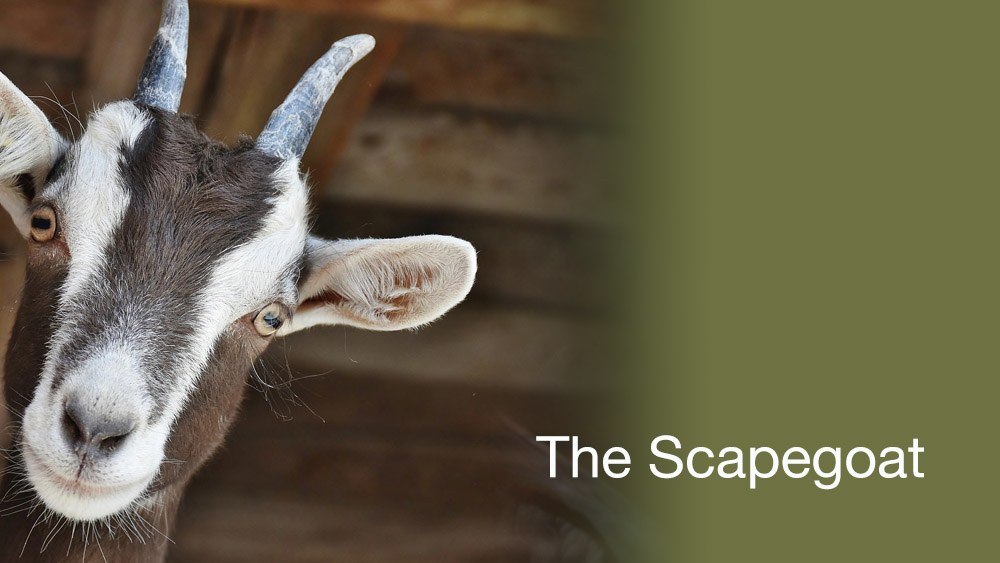
One person is chosen to bear the brunt of any psychological discomfort experienced by the family as a whole.
—Sarah Swenson, MA, LMHC
The scapegoat carries the burdens of the family.

Are you the scapegoat in your family? #MustRead
Tweet
Are you the scapegoat in your family?
The word scapegoat comes from an ancient story in the Old Testament, Leviticus 16. In it, two goats were chosen. One was sacrificed, and the other—the scapegoat—was sent into the wilderness, carrying with it the sins of the entire community. This act symbolically removed the guilt from the people. The tribe felt lighter, relieved—because their burdens had been laid upon the goat.
And that is where the idea of the scapegoat was born.
Sound familiar?
Dysfunctional families often repeat this same pattern. They single out one member—the “scapegoat”—onto whom all blame, shame, and conflict are projected. That person becomes the one cast out, isolated, and left to fend for themselves emotionally, just like the goat wandering in the wilderness.
But here’s something important: scapegoats are not chosen because they are weak. Quite the opposite. Often, the scapegoat is the most perceptive, empathetic, and resilient member of the family. They are the ones who question toxic behaviour, who resist conforming to dysfunction, who hold an inner sense of justice. In fact, many therapists will tell you that in families with deep dysfunction, the scapegoat is usually the healthiest one.
Parents who cannot face their own failings often use a child as their mirror. Instead of taking responsibility, they “project” their guilt, anger, or shame onto the scapegoated child. Over time, this child grows up believing that they are the problem—when in reality, they were carrying what never belonged to them.
As psychologist Lynne Namka explains:
In scapegoating, feelings of guilt, aggression, blame, and suffering are transferred away from a person or group so as to fulfill an unconscious drive to resolve or avoid such bad feelings. Later, the adult child recognizes that the problems they carried came from disturbed parents. Therapy helps them see the truth and heal.
Lynne Namka

At first, scapegoats internalize the blame. They believe the gaslighting. They try harder, people-please more, and bend themselves to fit the impossible demands of the family. But eventually, they begin to wake up. The lies unravel. The truth emerges: they were never the problem. They were the victim of a dysfunctional system.
And yes—it hurts deeply. But that awakening is also the beginning of freedom.
Becoming your authentic self
Healing as a scapegoat means reclaiming who you truly are. It means peeling off the layers of blame, shame, and false responsibility, and finding your authentic self again. With the right therapist, with education, with courage—you can break the cycle.
If you’ve lived this role, hear me clearly: there is nothing wrong with you. You are worthy. You are loved. You can set boundaries, speak your truth, and live free from the weight you were never meant to carry.
That is why I wrote My Courage to Tell—to show others the patterns, and to remind anyone who has lived this painful role: you are not alone.
If you are the scapegoat, here’s where to start:
- Read books about narcissism, family roles, and emotional abuse.
- Find a therapist experienced in narcissistic dynamics.
- Surround yourself with people who validate your worth.
- Learn to set healthy boundaries.
Most importantly—give yourself permission to heal.
Peace.
Resources:
lynnenamka.com
goodtherapy.org/blog/blameless-burden-scapegoating-in-dysfunctional-families-013-0174