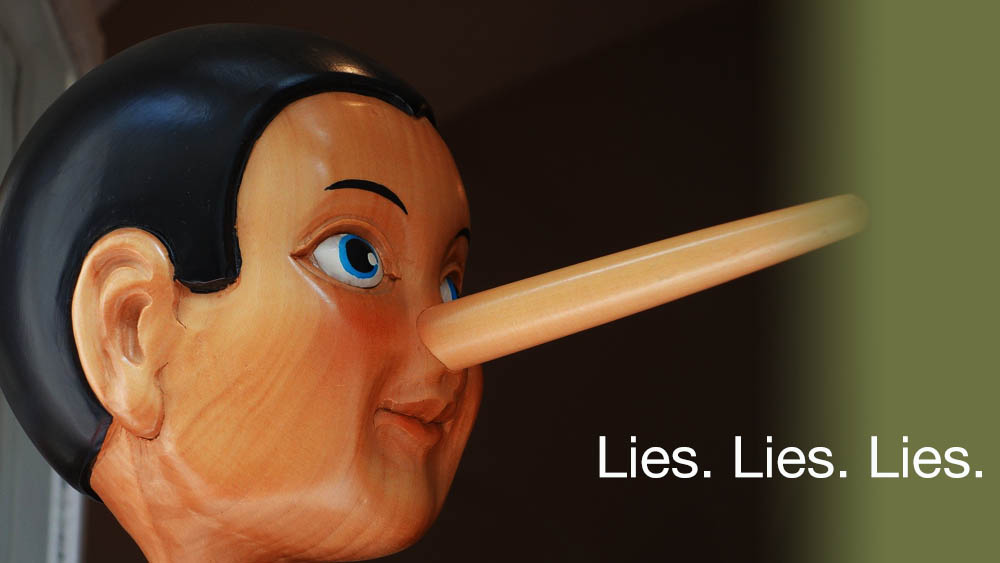
There were the lies. They were continuous. He would lie and no one was the wiser. She would complain of his bullying to her mom. “No I’m not,” he’d lie with a snicker and shake his head. “She’s making it up. She’s lying again Mom,” he’d say convincingly. “She’s always making things up!” He was really good at the lying.
—My Courage to Tell
Behaviorally, we show that the extent to which participants engage in self-serving dishonesty increases with repetition.
nature.com

LIES: When Someone Deliberately Lies to Hurt
Science. Brain scans. Dishonesty begins early.
We all lie. Sometimes we tell a little white lie to spare someone’s feelings. Sometimes we exaggerate, leave something out, or tell a child a harmless story because the truth is simply too complicated for their age.
But what happens when lying becomes something very different? What happens when someone deliberately lies to manipulate, deceive, control—or hurt another person?
That question interests me deeply because I grew up experiencing lies upon lies. As a child, I was repeatedly told things that did not match what I was seeing, hearing, or experiencing. The effect was profound. I began to question my own perception of reality. At times, I felt as though I was going insane.
Today, we have considerably more research into how dishonesty develops and how repeated behaviour can influence the brain. Some of the findings are fascinating.

Lying Begins Surprisingly Early
Research has shown that children begin experimenting with deception at a young age. Lying is part of normal cognitive and social development, and children gradually become better at understanding what other people know, believe, and can be made to believe.
That doesn’t mean a young child who lies is destined to become a dishonest adult. Children’s brains are developing rapidly throughout childhood, and their ability to understand consequences, regulate behaviour, empathize with others, and distinguish right from wrong continues to mature over many years.
So there is an important distinction here: A child who lies is not necessarily a future liar.
However, repeated patterns of behaviour can matter. This is where the science becomes particularly interesting.
The Brain and Repeated Dishonesty
One study that caught my attention was published in Nature Neuroscience and titled “The brain adapts to dishonesty.” Researchers examined what happens in the brain when people repeatedly engage in dishonest behaviour.
Using functional MRI, they found evidence that the amygdala’s response to dishonesty diminished as participants continued to behave dishonestly. The researchers described this as a form of emotional adaptation.
In other words, the emotional response associated with dishonest behaviour appeared to become weaker with repetition.
That does not mean that a brain scan can identify a “liar.” It does not mean that everyone who lies will eventually lose their conscience. And it certainly doesn’t mean that childhood lying automatically produces an adult who lies without remorse.
However, it does raise an important question: What happens when we repeatedly cross a boundary that once made us uncomfortable?
The Slippery Slope
Think about the first time you do something you know is wrong. You may feel uncomfortable. Your heart may race. You may feel guilty. But if you repeat the behaviour enough times, that emotional reaction can become less intense.
This basic idea—that our emotional response to something can weaken with repeated exposure—is supported by a large body of research. That is what I found so fascinating about the dishonesty research.
The brain is not static. Our experiences and behaviours can influence the way we respond to things. That doesn’t excuse harmful behaviour, and it doesn’t tell us why any particular person lies. But it helps us understand how behaviours can become easier to repeat.
But What About the Deliberate Liar?
This is the part that interests me most. There is a huge difference between a child saying, “I didn’t eat the cookie,” when there are crumbs all over their face—and an adult deliberately constructing lies to control another person’s understanding of reality.
There is also a difference between someone who lies occasionally and someone who has developed a persistent pattern of deception. In some situations, lying becomes part of psychological manipulation.
The person may deny something that happened, invent stories, tell different versions of events to different people, or confidently repeat something that isn’t true. Sometimes, when confronted with evidence, they simply create another explanation.
For the person on the receiving end, this can be incredibly destabilizing.
When Lies Make You Question Yourself
This is where my own experience comes into the story. When you are repeatedly told something that contradicts what you know happened, it can begin to affect your ability to trust your own perception.
As a child, I didn’t have the language for what was happening. I only knew that something didn’t make sense.
If someone tells you again and again that what you saw didn’t happen, what you heard wasn’t said, or what you remember isn’t true, eventually you may stop asking, “Is this person telling me the truth?” and start asking, “Can I trust myself?”
That is a very different kind of damage, and it is one reason psychological manipulation can be so confusing.
The lie itself may not be the greatest injury. It can be the erosion of your trust in your own reality.
So, Can Science Explain a Person Who Lies Without Remorse?
Not completely. There is no single brain scan, personality trait, or scientific explanation that can tell us why one individual becomes a chronic or manipulative liar. Human behaviour is far more complicated than that.
However, neuroscience is giving us pieces of the puzzle. We are learning more about how the brain responds to dishonesty, how emotional reactions can change through repetition, and how behaviour and experience interact with the developing brain.
I find that fascinating. For someone who has spent a lifetime trying to understand what happened in my own family, learning that there are biological and psychological mechanisms involved has been validating.
Not because science can explain everything, but because sometimes science gives us a language for experiences we could not explain when we were living through them.
How Do You Deal With a Liar Who Has No Remorse?
That is a question I’ve been dealing with for much of my life. We will all encounter dishonest people. We may encounter them in our families, our workplaces, our friendships, our relationships—or simply along the road of life.
We cannot control whether another person tells the truth. But we can learn to recognize patterns. We can learn to stop arguing endlessly with someone who is committed to their version of events. We can learn to document important information and seek outside perspectives when our own reality is continually being challenged.
Perhaps most importantly, we can learn to trust ourselves again.
Sometimes the most important question isn’t, “How do I make this person tell me the truth?” It is, “What do I need to do when I know the truth and this person refuses to acknowledge it?”
That is a very different question. Sometimes, it is the beginning of getting your own reality back.
A Note About the Videos
I watched an interview with Dr. Phil and Megyn Kelly discussing lying, and it raised many of the same questions for me. It is an interesting conversation about the different ways people lie and why some forms of dishonesty can become particularly destructive.
I also include a Kermit video below. It may seem strange to include a puppet video in an article about psychological abuse, but sometimes a simple story can illustrate a very complicated dynamic.
A note of caution: If you have experienced psychological abuse or manipulation, some of the material may be triggering. The characters are puppets, but the dynamics they portray can still evoke a strong emotional response.
Watch only if you feel comfortable doing so.
Peace.